
一、函数
1、定义
将命令序列按格式写在一起,可方便重复使用命令序列

//方式一
function 函数名 {
    命令序列
}
//方式二
函数名() {
    命令序列
}
2、函数返回值
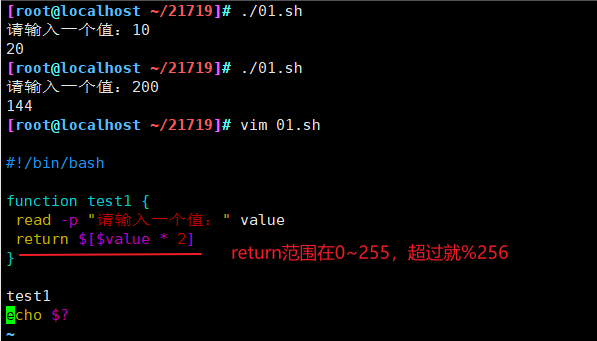
return表示退出函数并返回一个退出值,脚本中可以用$?变量显示该值
2.1 使用原则
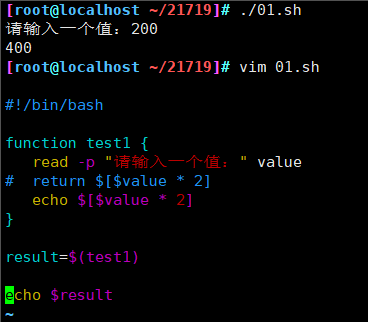
#!/bin/bash

function test1 {
   read -p "请输入一个值:" value
#  return $[$value * 2]
   echo $[$value * 2]
}

result=$(test1)

#echo $result

echo $[$result * 2]
二、函数传参
1、函数变量的作用范围
函数在Shell脚本中仅在当前Shell环境中有效,
Shell脚本中变量默认全局有效,
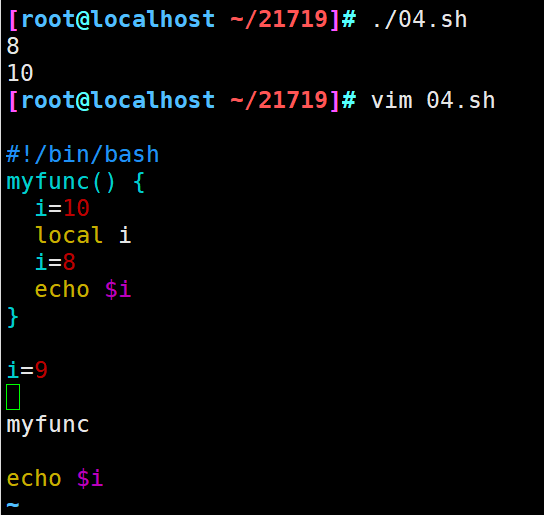
将变量限定在函数内部使用local命令
#!/bin/bash
myfunc() {
  i=10
  local i
  i=8
  echo $i
}

i=9

myfunc

echo $i
三、递归
函数调用自己本身的函数
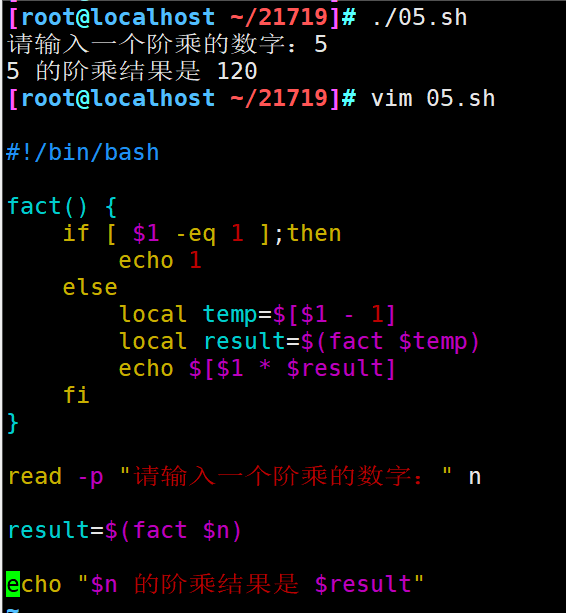
1、阶乘
#!/bin/bash

fact() {
    if [ $1 -eq 1 ];then
        echo 1
    else
        local temp=$[$1 - 1]
        local result=$(fact $temp)
        echo $[$1 * $result]
    fi
}

read -p "请输入一个阶乘的数字:" n

result=$(fact $n)

echo "$n 的阶乘结果是 $result"
四、递归目录
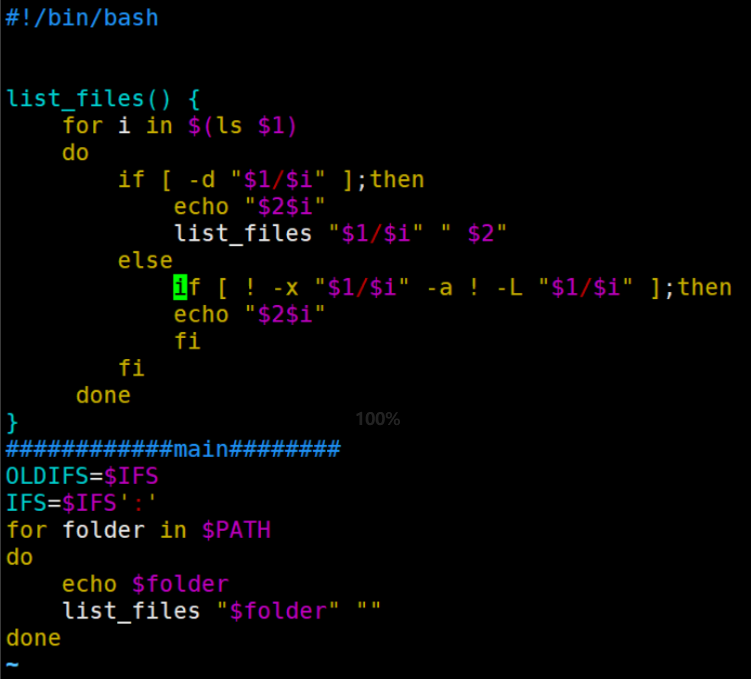
#!/bin/bash


list_files() {
    for i in $(ls $1)
    do
        if [ -d "$1/$i" ];then
            echo "$2$i"
            list_files "$1/$i" " $2"
        else
            if [ ! -x "$1/$i" -a ! -L "$1/$i" ];then
            echo "$2$i"
            fi
        fi
     done
}
############main########
OLDIFS=$IFS
IFS=$IFS‘:‘
for folder in $PATH
do
    echo $folder
    list_files "$folder" ""
done
IFS=$OLDIFS
五、创建库
原文:https://www.cnblogs.com/htfhtf/p/15101719.html